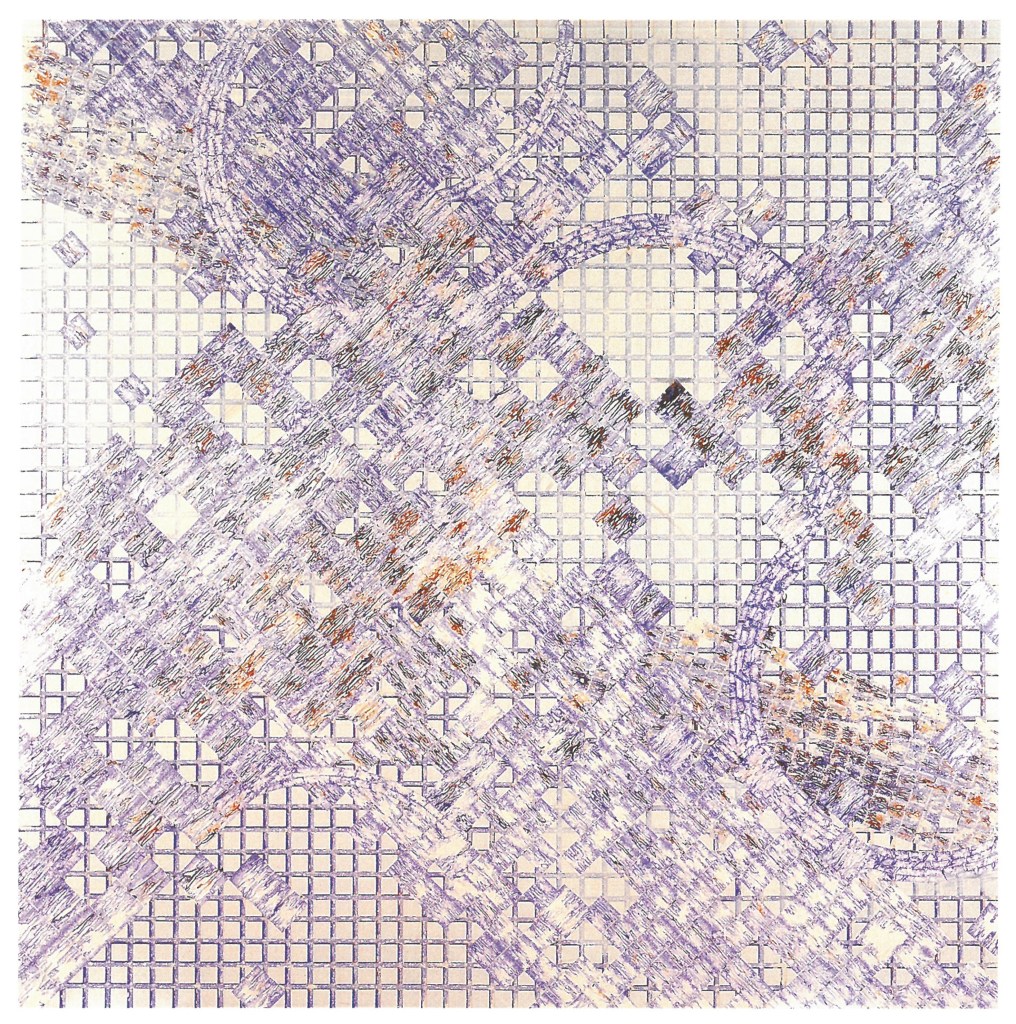
수많은 그리드와 큐브가 흰 바탕 위에 모여 서로 부딪치고 흩어지며 경쾌한 리듬을 만드는 류하완의 ‹바라보는 세계 A World of Seeing›는 수공예적 작업으로 오랜 시간과 집중력을 필요로 한다. 마스킹 테이프를 이용하여 캔버스에 2~4cm의 그리드를 만들고, 그 위에 물감을 바르고 다시 테이프 작업을 통해 다양한 사각형의 공간을 만들어나가는 식이다. 물감을 바르고 떼어내는 과정이 여러 차례 반복되면서 캔버스 위로 형상이 생겨남과 동시에, 테이프를 떼어낸 경계 사이로 물감이 스며들며 형체를 흐트러뜨리기도 한다. 이러한 점에서 류하완의 캔버스 속 그리드와 사각형은 ‘규범’이자, 그로부터 탈출하려는 ‘자유’로 해석된다. “그림을 그릴 때 자유를 느끼고 정신적 해방감을 만끽한다”는 작가의 말처럼, 류하완의 작업은 캔버스 위에서 하는 놀이이며 형성된 사각형은 그 놀이의 흔적이자 자유로움의 표출인 것이다. 결과적으로 그의 조형성은 사각형을 통한 질서와 무질서, 구축과 파괴, 생성과 소멸이라는 내용과 밀접한 관계를 갖는다. 그리드와 사각형은 조형적 질서의 아름다움과 힘을 전달하며, 그 사이에 만들어지는 빈 공간들은 우리 모두에게 상상의 자유를 부여한다

Ryu Hawan’s abstract painting delivers modern people’s lives. Her latest work, ‹A World of Seeing› is an abstract picture interpreted as ‘norm’ and ‘freedom’. This is the mental expression which reflects self and contains ‘invisible’ concept not ‘visible world’. Squares that cover her screen are also the absence of an object and simultaneously have their own life force as organic beings identification of being, which seem self-searching work rather than beauty of an image.
Her method to make grid and squares is handcrafted, needing long time and concentration. Square grid(3-5 cm) is made of paper taped called ‘Masking tape’. Applying color on this and taping make squares, forming a variety of square space. As a result, her characteristic in form is intimately involved in order vs disorder, construction vs disconstruction, and creation vs extermination etc through squares. The theme of her works delivers the beauty and the power of formative order through squares and grid in ‘norm’ and ‘frame’. Also, the boundary between squares, the spaces between squares have crack in thought, and here the ‘freedom’ is also created.
출처: 성곡미술관
 Ryu Hawan